
Business Transfer of Ownership Attorney in Berks County, PA
Buy-Sell Agreements • Stock Sales • Asset Sales • Smooth Ownership Transitions
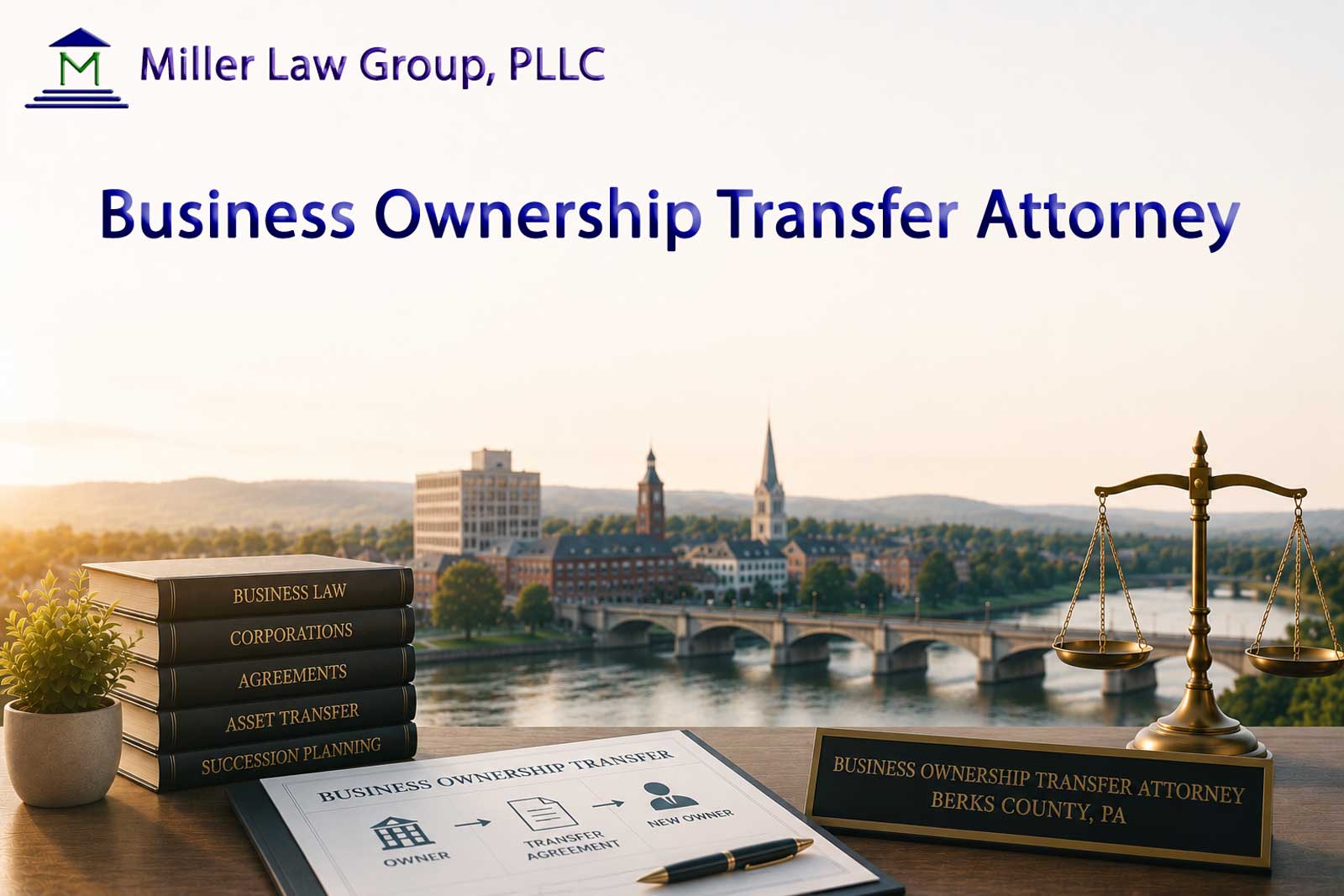
Transferring ownership of a business is one of the most important and complex events in a business owner’s life. Whether you are selling to a third party, transferring to family members, implementing a buy-sell agreement, or structuring an internal succession, our experienced Berks County business transfer attorneys ensure the transaction is properly documented, tax-efficient, and protects all parties involved.
A properly drafted buy-sell agreement controls what happens when an owner dies, becomes disabled, retires, or wants to sell. It prevents disputes and ensures a smooth transition.
Selling corporate stock is often cleaner and faster, but requires careful due diligence and tax planning to protect both buyer and seller.
Asset sales allow the buyer to select desired assets and liabilities while providing the seller with potential tax advantages. We handle every detail of the transaction.
Transferring ownership to family members or key employees requires careful planning to avoid family conflict and minimize taxes.

I personally guide business owners through ownership transfers to ensure the deal is fair, tax-efficient, and protects everyone involved.
In a stock sale, the buyer acquires the entire corporation (including liabilities). In an asset sale, the buyer selects specific assets and can often avoid unwanted liabilities. Tax consequences differ significantly between the two.
It creates a legally binding plan for what happens when an owner wants to exit, retires, becomes disabled, or passes away — preventing disputes and ensuring continuity.
It can. Pennsylvania imposes an inheritance tax on transfers at death — 4.5% to children and other lineal descendants, 12% to siblings, and 15% to others.
However, Pennsylvania offers a Qualified Family-Owned Business exemption that can pass a qualifying business to family entirely free of inheritance tax. The business generally must have fewer than 50 full-time-equivalent employees, a net book value of assets under $5 million, and at least five years of operation — and it must go to qualified family members who keep it for seven years, with annual certification to the Department of Revenue.
Lifetime gifting and installment sales are separate strategies. Because the rules are detailed, we plan each transfer around your specific situation.
Stock or asset sales usually take 3–9 months depending on complexity, due diligence, and financing. Family transfers can be structured more quickly but still require careful documentation.
It depends on how the deal is structured. In a stock sale the company keeps its contracts, leases, and employees because the entity itself doesn’t change — though many agreements contain change-of-control clauses that require the other party’s consent.
In an asset sale, contracts and leases generally must be individually assigned (often needing landlord or counterparty approval), and employees are typically terminated and rehired by the buyer.
We review your key agreements early so consents and assignments are handled before closing.
Yes. Business transfers involve complex contracts, tax implications, and liability issues. An experienced attorney protects your interests and helps avoid costly mistakes.
Important: This contact form is for informational purposes only. No attorney-client relationship is formed until a written engagement agreement is signed.