Understanding Bankruptcy in Pennsylvania
A Bankruptcy Attorney is not legally required in PA when filing for Bankruptcy. However, our expert Bankruptcy Attorneys can help you immensely by ensuring you're filing accurate and correct documents and schedules. Accuracy is critical because incorrect information can adversely affect your settlement.
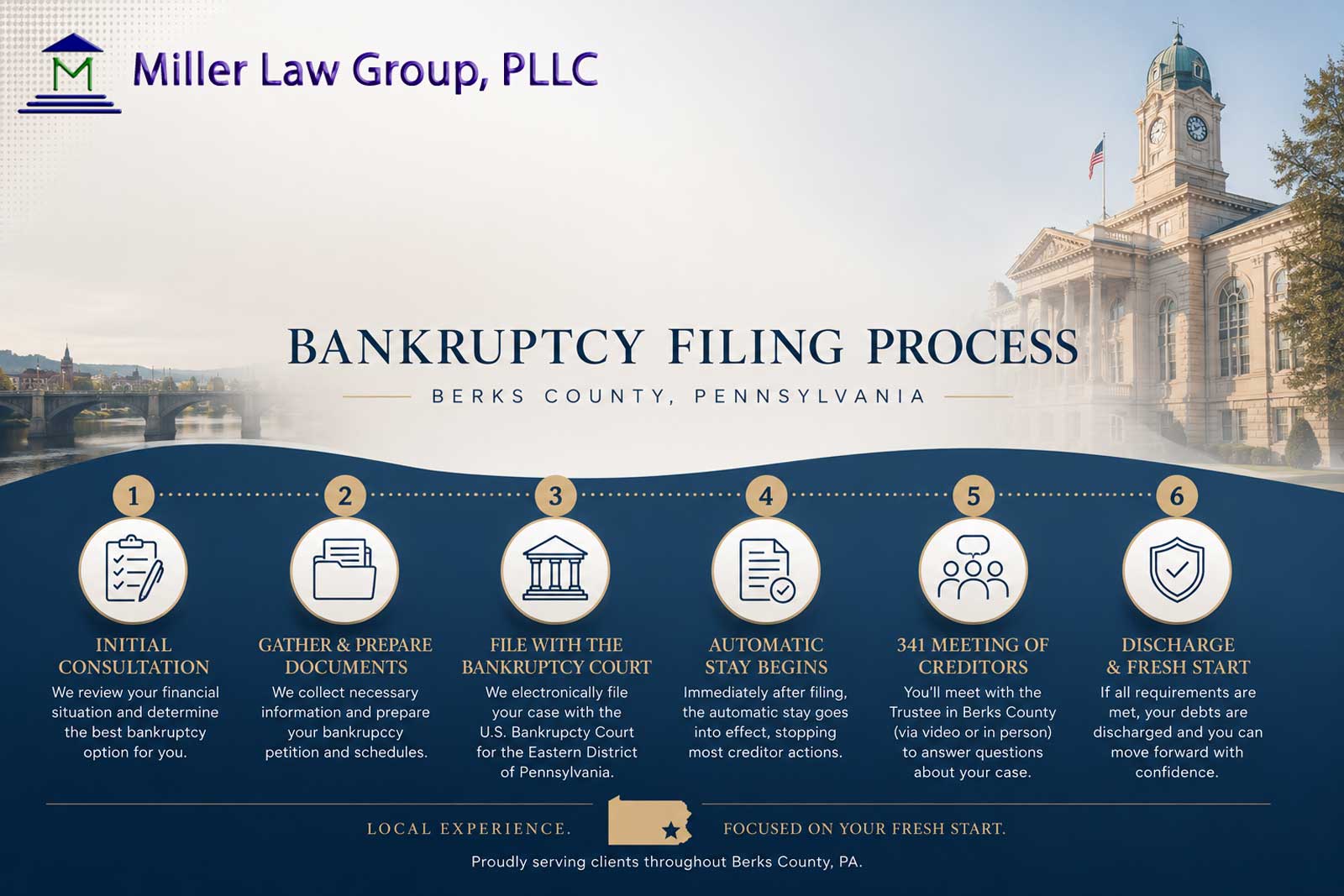
Steps to Filing Bankruptcy
Assess Your Financial Situation
You begin the bankruptcy process by
- itemizing your
- income sources;
- monthly living expenses;
- debts;
- assets; and
- key financial transactions over the past 24 months;
- gathering
- tax returns for at least the last two years; and
- documents relating to any property you own.
Our Bankruptcy Attorneys can help you determine what documents you need to ensure you don’t leave anything out.
Credit Counseling Requirement
Complete Credit Counseling: Attend a court-approved credit counseling session, which is required before filing.
Filing Your Bankruptcy Petition
When you have all your financial information and documents, you can start the bankruptcy filing process by
- filing several forms, including a petition with the Pennsylvania District Bankruptcy Court.
- The court uses this paperwork (known as the schedules) to determine how to proceed in your case.
- This information must be accurate and up-to-date, or it may negatively affect your petition;
- filing your suggested repayment plan for a Chapter 13 Bankruptcy
- You and your attorney must make arrangements to start your payment plan. You usually make payments through direct withdrawals from your bank account;
- The payment plan must account for all of your disposable income for a minimum of three years and must use this income to pay off your debts; and
- lastly, pay filing costs.
Meeting of Creditors (341 Meeting)
- A Meeting of Creditors, also known as a 341 Meeting, is a required step in the bankruptcy process where the debtor meets with the bankruptcy trustee and creditors.
- It is an informal hearing held to verify the accuracy of the debtor's financial information and bankruptcy petition.
- The trustee may ask questions about the debtor's assets, debts, income, and expenses to ensure full disclosure.
- Creditors can also attend to ask questions, though they rarely do.
- The meeting typically lasts 10-15 minutes and does not involve a judge.
- Debtors must bring identification and required documents.
- It’s critical to attend to move the process forward.
Debt Discharge and Moving Forward
Receive a Debt Discharge: After completing the requirements, eligible debts will be discharged, giving you a fresh start.
You Won't Find Better Bankruptcy Lawyers in Reading, PA, and Berks County to Help You File
It is common sense to ensure your documentation and schedules are complete and accurate. That's because you want your Bankruptcy to go through as fast as possible with the best possible settlement. You also know that the best possible way to ensure you've completed all the required documents and schedules and that they're accurate is to have the guidance of an experienced, proven Bankruptcy Attorney. Here's why we're your best choice in Reading and Berks County.
We have
- 40+ years of experience in PA Bankruptcy Law;
- helped hundreds of people File for Bankruptcy in Berks County around Reading, PA;
- knowledge of precisely what the court is looking for and expects in your filing documentation and schedules;
- have a full breadth of Bankruptcy legal expertise, including Business Dissolution, Business Contracts, Business Taxes; Spousal Support and Alimony, Child Support, and Estate Planning; and
- very importantly, a reputation in Berks County for being the most supportive law firm to assure you everything will be OK.